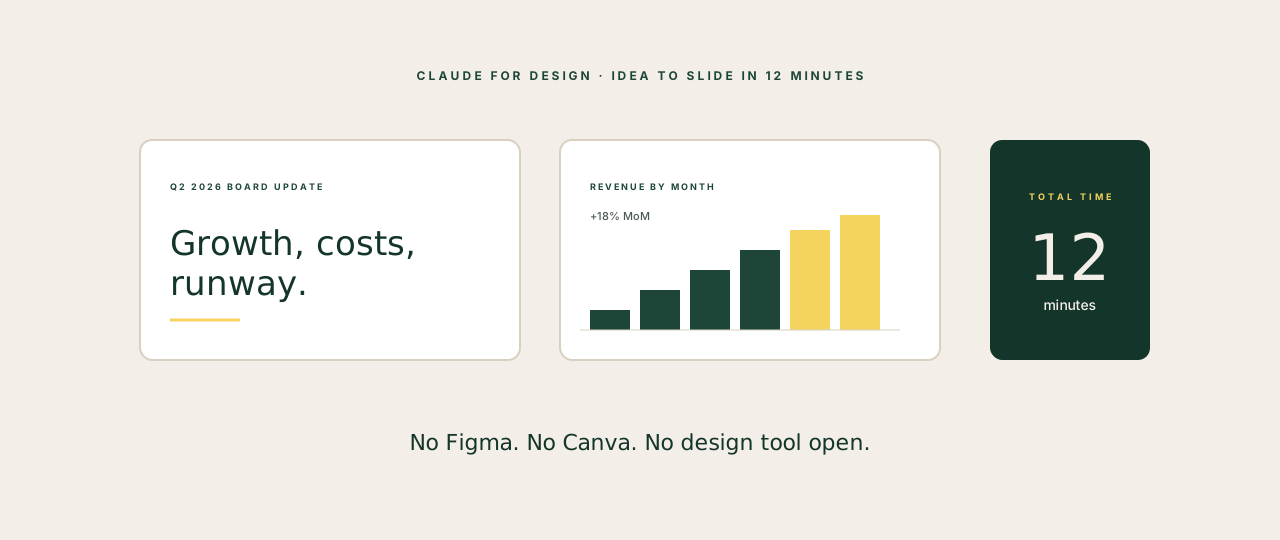
The single biggest design tax on founders is "I should make this look nice before sending it." Two hours later, you've fiddled with a layout you'll never use again, and you still have an investor update to write.
Claude does about 80% of the founder-grade design work in minutes, inside the chat, with no design tool open. The other 20% you should still send to a designer. Knowing the line is the leverage.
The four jobs Claude is genuinely good at
1. Interactive charts and dashboards. You hand Claude data (CSV, paste, a Stripe export). Claude generates an interactive HTML chart with hover tooltips, filters, and sometimes a Reload button. You drop it in your dashboard, share with the team, done. No D3 expertise required. No Tableau licence.
The hidden value: these charts pull live from your connectors. So a "weekly revenue dashboard" can be a real artifact you re-open every Monday and it refreshes itself.
2. Slide drafts in PowerPoint or Google Slides. With the pptx Skill switched on, Claude writes real .pptx files. Title slides, content slides, charts, speaker notes. Not a Markdown outline that you then translate. Real slides you can open and edit.
The pattern: ask Claude for the deck content first. Once the structure is right, ask for the .pptx. Don't try to design and write at the same time.
3. Simple SVG diagrams. Architecture sketches, flowcharts, organisation charts, process diagrams. Claude generates clean SVGs that look intentional. They won't win design awards but they'll communicate the idea ten times better than a hand-sketch you photographed on your phone.
4. Image generation for social and lightweight marketing. Claude integrates with image generation models (Nano Banana 2 is the current Google one, but there are others). For social posts, blog headers, simple illustrations, it's faster than briefing a designer for a one-off. The trick is iterating on the prompt, not the result.
The four jobs to send back to a designer
Knowing the limit saves you the embarrassing meeting where someone says "did AI make this?".
1. Brand-perfect work. Logos, brand systems, anything where the visual identity matters and a typography mistake is a credibility hit. Claude can match a brand if you give it the spec, but it will not invent a brand worth keeping.
2. Photoreal composition. Cover photos for a website, product photography, hero images for a campaign. Image generation gets close but rarely lands. Use stock or a real shoot.
3. Pixel-precise layouts. If you need exactly 24 pixels of padding, Claude is the wrong tool. Open Figma. This is a 5-minute job in the right tool and a 30-minute negotiation in the wrong one.
4. Animation and motion. Looping product demos, transitions, anything moving. Send to a designer or use a dedicated motion tool.
The Claude rule for design: if it's a one-off communication, do it in Claude. If it's brand-load-bearing, send it to a designer.
From idea to investor slide in 12 minutes
A real workflow. You're prepping for a board call and need three slides on Q2 progress.
Minute 1: open Claude. Tell it the audience, the message, the data sources. Three sentences, not three paragraphs.
Minute 2 to 5: Claude pulls the latest from Stripe, the latest growth numbers from the spreadsheet, the latest team highlights from Slack or your project tracker. You see the data summarised before any slide exists.
Minute 6 to 8: you tighten the narrative. Ask Claude to lead with the one number that matters, demote the others.
Minute 9 to 11: Claude generates the .pptx. Three slides, your numbers, simple charts, your colour palette if you've shared it.
Minute 12: you open the file, change the one chart title that doesn't quite work, save, send.
The same job in Figma plus Excel plus Google Slides used to take 90 minutes. The ratio is 7 to 1.
The setup that makes this work
Three things to have in place before this lands:
- Cowork installed, with a folder Claude can save to
- The pptx and xlsx Skills enabled (see our Skills note)
- A one-page brand spec in that folder: colours, fonts, the three things you never want Claude to do. Three lines is enough.
That third one is the secret. Claude follows brand specs you give it. The work goes from generic to on-brand the moment that file exists.